|

 |
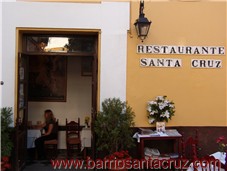
Some say that the
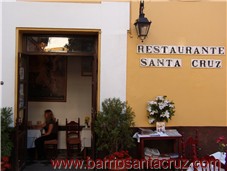
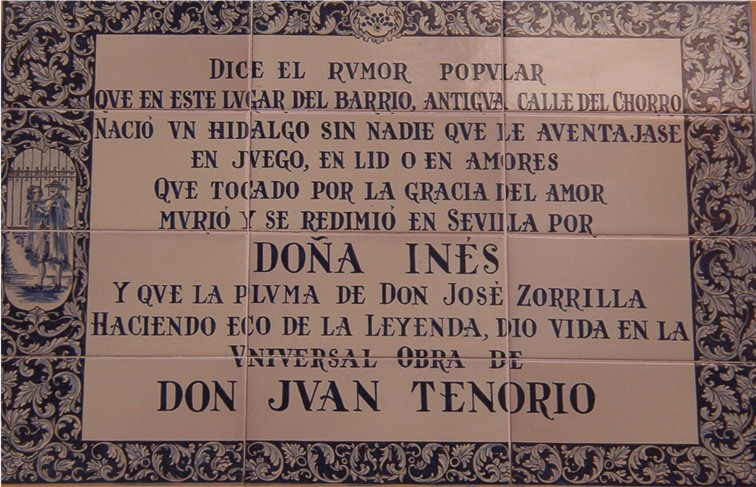
mythical Don Juan may have been born in Barrio Santa Cruz, in
the Sevillian
señorial casa on Calle Justino de Neve
number 2, today occupied by a prestigious
restaurant, on the corner of Plaza de
los Venerables and across from the Hostelería del Laurel, very
close to where it is said Doña Inés was born in
Plaza de Doña Elvira.
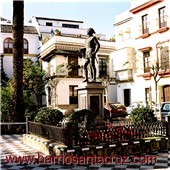
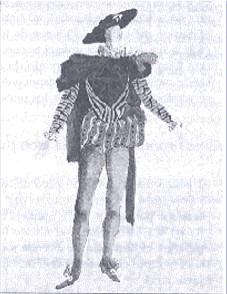
The striking figure of
Don Juan can be seen in the statue placed in
Plaza de los Refinadores, an immortal
figure occasionally incarnated by some Sevillians.
The works and mythical
figure of Don Juan have been written about for all tastes and
from all points of view, even the psychiatric, and have
inspired, among others, a
Mozart en su “Don Giovanni”; a Moliere en
“Don Juan ou le festin de Pierre”; a George
Bernard Shaw, en “ Man and Superman”; a
Goldoni en "Don Juan Tenorio o El disoluto";
a Alexander Pushkin en "El convidado de piedra";
a Alejandro Dumas en "La caída de un ángel";
a Thomas Corneille en "The feast of Stone";
a Edmond Rostand en La Dernière Nuit de Don Juan" ;
a Baudeliere en
"Don Juan aux Enfers";
a Alfred de Musset en "Une
matinée de Don Juan" ; a Henri de Montherlant en
" Don Juan ou la Mort qui fait le trottoir"; ...,
a
Flaubert, Balzac, Lord Byron, Stendhal,
Hoffmann, Frisch, Grabbe, Kierkegaard, Brecht, Tolstoi, Shaw,
Zorrilla, Valle-Inclán, Azorín, Madariaga, Unamuno.....Mozart’s
Don Giovanni, Moliere’s Don Juan ou le festin de
Pierre, George Bernard Shaw’s Man and Superman,
Pushkin, Dumas… |